Employee Monitoring Policy Guide
Software is the easy half of monitoring. The policy is what makes it defensible — to employees, clients and regulators. This guide covers the clauses a practical, transparent monitoring policy needs.
Say what is collected, and what is not
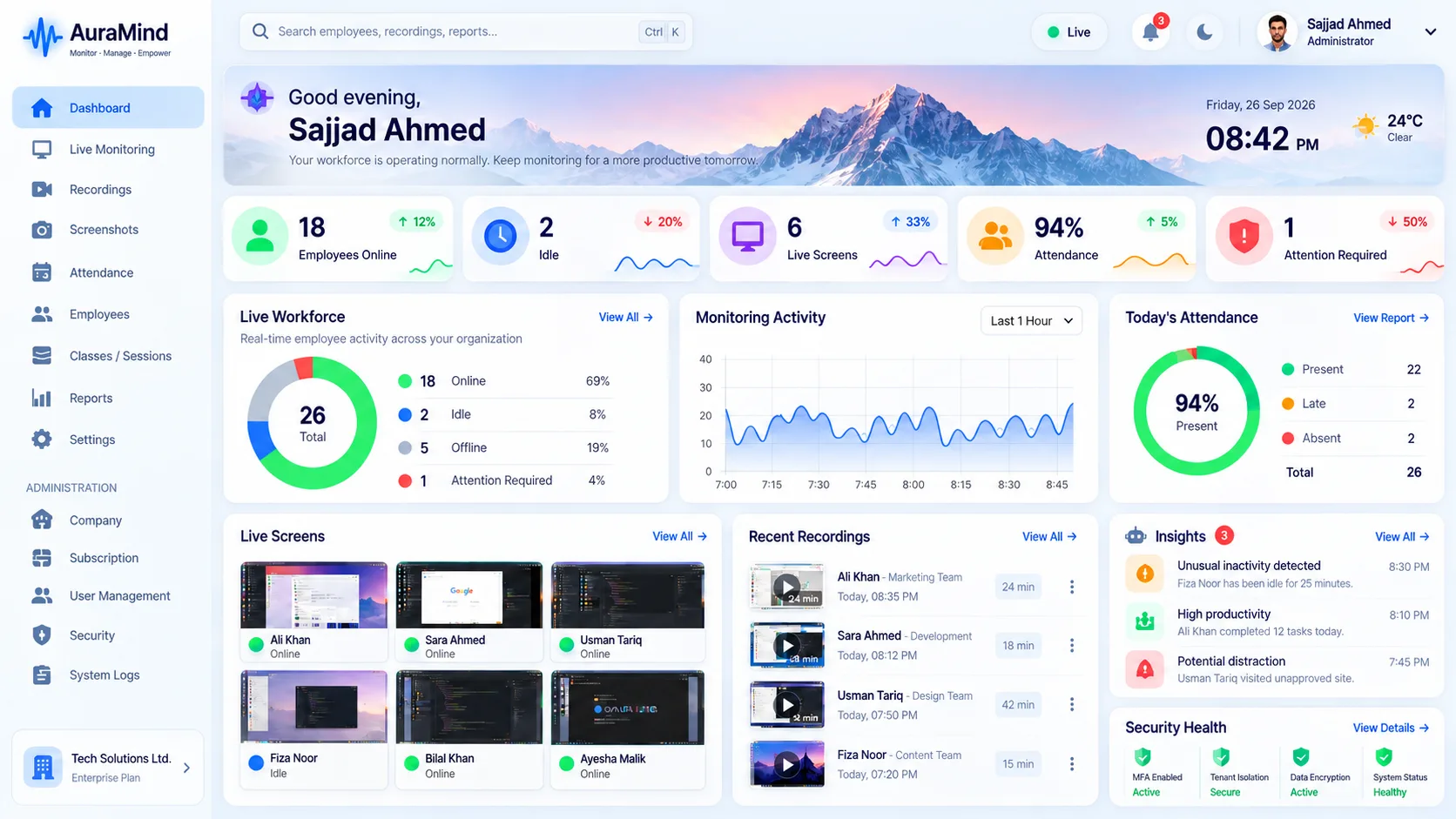
List the signals: active time, applications, work websites, screenshots, attendance. State exclusions just as clearly — for example, AuraMind PRO does not log keystrokes or read personal messages.
Explain the purpose in business terms
Coaching, workload balance, client evidence, security. Employees accept visibility they understand; they resist surveillance they have to guess about.
Limit who can see what
Role-based access, named administrators, and audit trails. A team lead should not browse another team's screens.
Set retention and review periods
Decide how long screenshots and activity records live, who reviews the policy, and how employees can raise concerns.
Communicate before you switch it on
Announce the rollout, walk through examples, and answer questions live. Monitoring discovered is monitoring resented.
Frequently asked questions
Is a monitoring policy legally required?
Requirements vary by country and state. A written, acknowledged policy is best practice almost everywhere; check local employment law before rollout.
Should employees sign the policy?
Acknowledgement is good practice. Keep it plain-language and store the signed copy with HR records.
Related pages
Monitoring Laws & Best Practices · Security at AuraMind · Employee Monitoring Software
See AuraMind PRO on your own team
Tell us your team size and goals. We will configure the right seats, modules and secure access for a guided evaluation.
Request access → Explore employee monitoring